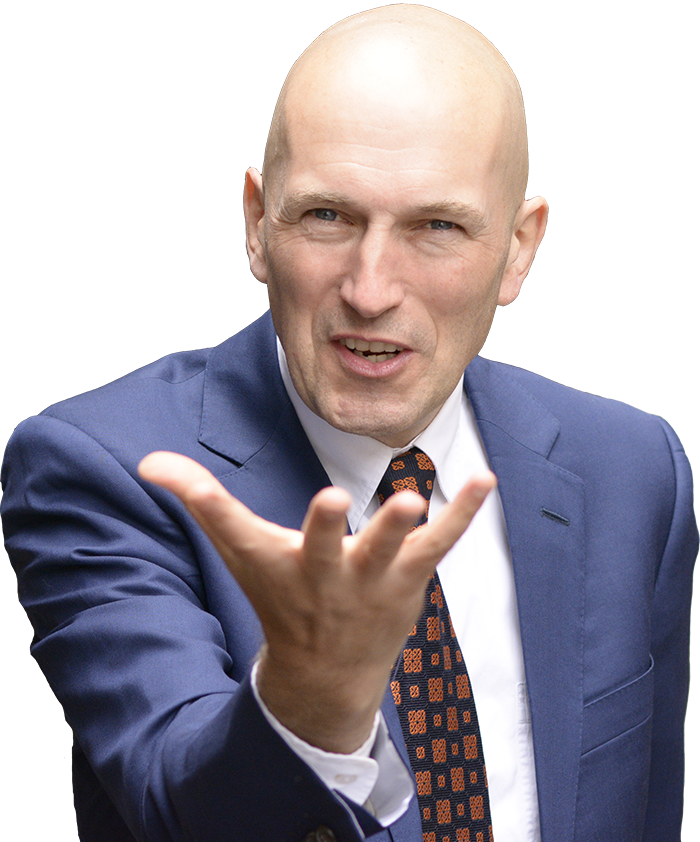
• Johan Taft

    “I help bright individuals and leaders in business, competitive sports and show business overcome obstacles in performance, reduce fear, gain peace and certainty and generate extraordinary results putting the sparkle back in their eyes!”

Stress is good for you!?

Stress is good for you!?

I often hear people say “stress is good for you. It stretches you and helps you get more done, helps you win…”

Have you ever heard that?

Let me tell you: stress is never good for you! I stress: never!

Tension however can be very useful and is sometimes critical to success.

Take the case of a tightrope walker for instance. The right amount of tension in the rope, not too little, not too much, is paramount. The rope walker will know exactly the right amount needed and will set the rope accordingly.rope_walker4

So what is stress?

Stress is when there is too much tension, to the degree that the integrity of the rope (or the act) is compromised and the rope breaks or distorts.

Likewise excessive tension (stress) in our lives leads to ill health, reduced vitality, poor relationships and general misery. Excessive tension in a business leads to inefficiency, drain of resources, high turnover of people, low morale, exhausted leaders, compromising of bottom line results, and so on..

So how much tension is good then?

I call it “Dynamic Tension”. It is the optimal amount of tension for a given situation to thrive. And this varies from individual to individual and situation to situation. The key is to find the right level of tension for you relative to  your situation at a given time for sustained optimal performance.

Some roles and situations call for low tension, for example in the case of the general duties of a librarian. High tension here will disturb the studious environment. Other roles and situations call for high tension, such as an infantryman in a siege. Low tension could cost him his life prematurely and reduce his platoon’s strength.

Learn to discover your optimum level of tension that will enable you to produce best sustainable results. You will find that there is a range that you work best within. This range is Dynamic Tension. Once you’ve found it and understand it, then learn to expand it. This will prepare you for future growth and for downturns such as the economic one many are currently facing.

So in summary, we can avoid stress by planning properly to operate within Dynamic Tension. If however we find ourselves beyond that range, then we can avoid the harms of stress by either finding a way to reduce the tension to a level that still supports us(sometimes removing oneself from the situation may be required) or by expanding ones capacity to deal with excessive tension increasing ones resilience. This comes from good training coupled with experience.

Stress is neither good for you or your business!

The invisible ceiling

In corporate circles there is often mention of the “glass ceiling”. An unspoken  limitation imposed by senior management holding individuals back from promotion and advancement for one reason or another, ranging from a less than perfect education background, to not towing the party line on ideas or culture, to maverickism and sometimes racial, sex or age discrimination.

There is however a far greater and more devastating “glass ceiling” at work in the business world: the self-imposed invisible barrier that keeps individuals in a fixed range of performance and results. To most it remains hidden from their view as they are too close to see and it probably has been running in one form or another since childhood. It is not easy to accept once we do see it, and least of all to overcome. That’s perhaps why the book shops are stacked to the ceiling with self-help books…

In a corporate setting, bosses, peers and sometimes direct reports can be useful in challenging this fixed state. And if you’re very lucky, you’ll take on the challenge and grow accordingly, or the organisation will proactively help you identify the conditioned limits that have held you back from excelling and put you through some effective training or even hire a personal mentor to support you. More and more corporates are recognising the need for this.

For those lone hammerentrepreneurs however, out there on their own, competing for business and sometimes fighting for sheer survival in an aggressive and unforgiving marketplace, this invisible ceiling can be like a lead ball attached to one’s foot, or even like noose around the neck: crippling and even mortal!

And because they are on their own, there might not be anybody to challenge it. So unfortuantely it runs it’s course and translates into actions and results…undesirable ones!

How much money has been left on the table? How much unnecessary stress resulting in health issues has it engendered? How many relationships has it damaged or destroyed? How much agro and grief, despair and lack of fulfillment has it generated?
You may think I am referring to low performers or to the lower ranks of the business community who no matter what won’t ever produce much anyway…
Sure, that group is certainly gripped by self-imposed fixed limitations
Think about the high flyers, the big leaders, the senior partners, the leading sales people, the big players…how much are they costing their business when they just perform average? The bigger the game, the more at stake!

Average performance is costly accross the board!

Time goes by anyway, and things have to get done anyway…so why do we settle for average performance?

Might it have something to do with this invisible ceiling, an internal structure of our own unconscious making that keeps us from excelling? A conditioning so engrained in us that we can’t even see it? A structure that has as its best allies as procrastination, resignation, fear, disorganisation, lack of prioritisation, low self esteem, arrogance, forcefulness, workaholism, confusion, self-sabotage or frustration to name but a few?

So what structures have you set up for 2009 to break through your invisible barriers? …or will your 2009 be a repetition of the past ..a perpetuation of the habits and behaviours that keep your results, income, expertise, wisdom, reputation and vitality stuck at safe, predictable and “comfortable”?
Or perhaps you have developed compensation strategies that make you look good or win when you really need (and you hope no one finds out the truth!)

Food for thought isn’t it?

I don’t suppose you’d like some help in setting up the rest of 2009 to break through your “glass ceiling” would you?

JOIN us for a Self-Help WEBATHON to assist the victims of the Costa Rica earthquake!

This Saturday January 17th & Sunday January 18th
JOIN us for a Self-Help WEBATHON
to assist the victims of the Costa Rica earthquake!

It’s LIVE right here! Join us!

Tune into my 45 minute talk for free on Sunday 18th at 00.15 (that’s a quarter past midnight Saturday night):

“Tiger or mouse in the face of uncertain times?”
3 ways to stop global difficulties from becoming personal strife

tigre-02-nb

1 Learn how to respond like a tiger rather than react like a mouse
Develop inner strength to assert your own agenda and values and not succumb to external pressures

2 Understand how to stop the recession from infecting your mind

You need an effective mental health regime to immunize yourself against media hype and social panic

3
Acquire the skills to leverage adversity to your advantage

Don’t be a victim of world events beyond your control.. Continuing to thrive during a storm requires special skills that you can easily learn


Genius

Genius

Leonardo Da Vinci once said: Genius is the ability to hold 2 opposing thoughts in one’s mind at the same time.

Too often, I hear people complain that they did not reach this goal or did not win that deal…yet again! They are disappointed, frustrated and even bitter about it, and perhaps close to giving up.
Unknowingly, they have set themselves up for failure right from the very start.
Their whole strategy (by default, due to no superior strategy) was to try harder… try harder to reach the goal in order not to fail.
By deduction, they are in fact putting all their efforts behind resisting failure. And the saying goes…”what we resist persists”. So they end up getting more of the same, more of what they actually did not want.
Does that sound familiar?

So what does Leonardo Da Vinci have to do with this?

Well, in the above example, reaching the goal and failure are merely two sides of exactly the same coin. So whether we focus on the goal, or focus on the failure, it’s pretty much all the same. It’s a no choice situation. (The goal being formulated from “avoid failure” conditioning; resisting failure is the main driver)

However, if we were to apply Leonardo’s wisdom, we would set ourselves up for a CHOICE situation.

How?

“Worst case, best case scenario” is one way how.

1. Determine the worst case scenario; the worst thing that could possibly happen. Then ask yourself, if this really were to  happen this way, could I live with it? could I find a way? Could I accept it? (Work on this until you can authentically say “yes, I could and would live with it if I absolutely had to; I accept!”)
2. Next, Determine the best possible scenario. What is the best possible outcome?  See it, smell it, feel it, sense it!
3. Now choose between the two. If you had a choice, which one would you choose, knowing that you could live with either?
4. Play full-out for the one you chose, (it’ll most likely be the best case scenario, always keeping in mind that worse came to worse, you could live with the worst case scenario if you had to.)

When you approach a problem or a goal this way, you are no longer putting your energy into avoiding what you don’t want. You are operating from a place of choice rather than one of fixed past conditioning.You are no longer resisting failure.

You are in the flow, and  life works best when we are in the flow.

Head trash or gut talking?

Imagine
You’re either a business person about to close a big risky business deal
Or you’re a pro-athlete ready to sign with a new team promising to jet-propel your career
Or pehaps you’re a performing artist invited to sign on the dotted line with a dynamic new label…

And just as you are about to take the big step, the little voice in your head says “hold your horses, don’t do it!”

Panic!! Can you trust the little voice??

Is it your helpful intuition speaking , or is it that dreaded persistent voice of limitation, self-sabotage and fear, intefering yet again with your growth and expansion?

How to tell the difference?

Here are a few pointers:

If it’s your gut or intuition talking, then you should feel like you just received a valuable insight, a positive wake-up call, an “email” in your minds eye with new data.
It’s like a gentle but certain nudge from a faithful friend.
You should feel light.
Intuition gives you a sense of more faith in yourself, enhanced personal power.
It increases your belief in possibility.
It supports your current values and goals.
Intuition is the still, small voice within that feels authentic, powerful, and new.

If on the other hand, that inner voice was the inteference of your head trash (also called conditioning), then you would feel your energy drop.
You feel frustrated, in complaint; you want to be right about everything…
You are held back, your sense of self is eroded. You feel heaviness.
Fear is limiting your freedom to choose. It places your sense of power outside of you and it produces dependant views and responses. It could even result in addictive resposes (having you reach for the pack of cigarettes the tall glass of Scotch or the line of white powder…).
Conditioning is the old, familiar voice,dependent on external authority.
And if you do listen to it and act on it, it will ultimately leave you feeling unfulfilled, with no authentic ownership of your choices, continually striving for a better reality that never comes.

Certitude vs. certainty

Some years ago, back when I was working for Burger King Corporation, responsible for the operations of many of their restaurants in Greater London,  I spent a good deal of my time in my car driving accross the urban sprawl from one store to another. Luckily I had the good sense to put that unproductive driving time to good use: I’d tune in to educational programmes on the radio or I’d listen to self-development and instructional audio-tapes. My car became a rolling university.

One of the programmes I tuned into on the BBC as I was tackling the busy central London traffic one Wednesday afternoon, I will never forget! The message, from a very unlikely source I must add, changed my view of life forever and put me on a quest: the quest for Certitude.

The radio programme was an interview. An interview with 4 leaders from 4  different religions. Top level holy men if you like. I was about to tune out of the programme as it was not a topic I was particularly interested in, until I heard that each of these leaders (a Bishop from the Christian faith, a Lama from the Buddhist faith, a Chief Rabbi from the Jewish faith and a  Mulla from the Muslim faith) had all actually been raised in different religions and cultures to that which they were now representing. For instance the Bishop had been raised a Hindu, the Lama had been raised in Judaism, the Buddhist had been raised a Muslim. All these men had converted over to a different religion than that which they were born into.

That caught my attention, raised my curiosity level and caused me to listen in further. The bulk of the interview was a series of different questions to each of the leaders mainly about their individul journeys and about the differences between the faiths.

The highlight of the programme for me however was towards the end  when the reporter turned to the Bishop and asked: “how has life changed for you since you’ve reached the high level of spiritual/religious development and awareness that you now have?”

His answer was something like this: “Before, to me life was full of certainties and uncertainties. For instance, I was pretty certain that I’d have 3 meals per day to eat and that my job was relatively secure, but I was unceratin as to whether my wife truly loved me and as to whether she would remain faithful. Equally I was quite certain that I’d improve my golf handicap by the end of the year but was uncertain as to whether my stock market shares would perform as I had planned. This perpetual pendulum swing between certainty and uncertainty kept my mind in an ongoing  state of agitation and my emotions on a rollercoaster ride rolling from glee and elation all the way over to insecurity, worry, vulnerability, intense fear, anger and despair. As a result, in order to avoid the suffering, I spent all my energy developing control strategies in every area of my life trying to desperately avert uncertainty and to “cement-in” certainty.  This would go on all day long and often throughout the night…of course very tiring and stressful!

Now, I have come to understand and experience CERTITUDE: the fact that life is filled with certainties and uncertainties, and that’s ok!” The radio programme concluded there. And my life took a fresh turn!

It was immediately clear to me that my existence up to that point (and most everybody’s that I knew) had been  governed by the dualistic tug of war between  certainty and uncertainty. And I was painfully caught somewhere in the middle! at a huge cost to my productivity, fulfilment and health.

At that moment I yearned to elevate my life to one of certitude. My quest had begun!

A sharper mind

In his book “the 7 habits of highly effective people“, Stephen Covey talks about habit number 7: “sharpen the saw”: principles of balanced self-renewal. You can’t cut a tree with a blunt saw. Equally, living life with a blunt mind does not work very well.

One of the best ways to sharpen the mind is through meditation. Meditation is nothing new to mankind: man has been meditating for millenia, with astonishing results. It always amazes me why more people do not meditate, and why meditation is not part of school and university curriculums.

Miyomoto Musashi, known in Japan as “Kinsei”, that is, “Sword Saint”, is hailed as one of Japan’s greatest swordsmen ever. He like many of his 16th century contemporaries and indeed most great martial artists past and present, understood the importance of attaining “the right state of mind”. They understood that a mere nano-second of “wandering mind” could cost them their head! Meditation was pretty much not an option but a necessity. Increased awareness, total presence of mind, no inteference from past emotional residues, no distraction from desire; pure focus on the task at hand, total mindfulness!

Musashi’s famous book called “Gorin no sho” (The Book of Five Rings) describes this state of mind along with swordsmanship skills and stategy. Out of 60 duels to the death, he lost none! He was clearly a great warrior but also a great man. Like Leonardo Da Vinci, his skills were diverse. He learned to tap into more of his “whole-mind”. He was an excellent calligrapher, a versed poet, an accomplished painter and a renowned teacher. To this day, the cave in which he meditated and wrote his famous book can be visited. (that’s for my next trip to Japan!)

Miyamoto Musashi’s example of meditation’s phenomenal benefits and powers is an extreme one. There are many “extreme” examples. For instance the Buddhist monks who meditate overnight outside in sub-zero degree conditions and wake up in the morning from their practice with the snow around them all melted. It sounds far-out doesn’t it? Scientists have obviously been very keen to investigate these phenomena.

In 1992 I met a Tibetan Lama who had accomplished this. His seniors had invited him to carry out this practice one very cold snowy night up in the Himalayas in the presence of Western scientists who were very sceptical and had come equipped with all sorts of equipment and measuring devices. He told me that once they had all reached the spot where the monks would sit out the night and the scientists would observe and measure , the monks, naked except for their loin cloths took their sitting positions and began their deep meditation practice.

After only 30 minutes, the scientists, clad in thick anoraks, oxygen masks, boots, gloves and other Arctic gear, struggled to remain still in one place (their observation point), facing the bitter cold and could no longer bear it and so returned to their warm camp for some hot coffee! They came back the next morning to find the monks in the sub zero cold Himalayas mountain, fresh with snow from the nights flurries, all still clad in nothing but loin cloths, in deep meditation in the same sitting positions, with the snow around them all melted away!

Meditation is not just for the “super-heroes”. It is for us mere mortals too. The benefits to our life and all its activities are practically limitless. In my experience, it’s one of the best ways to clear up all the residue from the past and reduce the constant distracting cravings for a “better than now” future. It helps put an end to the “someday some time promise of a better life” that our society seems plagued with. Correct practise of meditation is one of the best ways to deal with all the mental fuzz, emotional negativity, low self-esteem and distorted self-belief, lack of clarity, the negative effects of our surrounding environment, various life traumas and dramas that we encounter and suffer, the counter-productive impacts of our conditioning and the knee-jerk learned reactions that all sabotage our best efforts to lead a powerful and fulfilling life and to produce good results in our relationships, careers, projects and activities.

When we meditate regularly, we gradually transcend the grips of our past and all it’s residue that holds us back; we dissipate our anger, our fear and our worry. A good meditation method will help us eliminate impure energy and gradually dispel ignorance. It will help us concentrate our pure energy and increase our wisdom. We become present. Present to the greatness of life right here, right now. Present to what is going on now without the continual interference of all those thoughts, anxieties and distractions that seem to invade our mind, that what the zen masters call “the chattering monkeys”.

We become lighter and brighter. A clear fresh perspective opens up. We begin to see past our blind-spots. Our awareness increases, our mind sharpens. Our understanding of ourselves and our life evolves. Our understanding of others  grows too. We also improve our mental health and our mental age. And at the very least, regular meditation helps us cope better with daily stress.

Would our performance not therefor improve? Be it in business, sports, the arts or everyday interactions with loved ones?

With daily meditation, a life or “certainty and uncertainty” gradually develops into a life of “certitude”. (More on this soon)

Johan teaches many of his clients to meditate.

Do you write down your goals?

Chris Hoy, who just picked up 3 gold medals in Beijing (making him the first British competitor to win 3 golds at a single Olympics since 1908) does. In fact, at the early age of 13 he wrote in his diary that one day he would win gold at the Olympics!

…What goal do you have written in your diary?

Authenticity, our pathway to greatness

Being authentic is not something people talk about a lot. Maybe because it is a quality not much appreciated and not much sought after in our money oriented, materially emphasised, image and fame driven culture. Politicians have become spin masters, entertainers have become fame seekers, sportsmen have become  idols.

How much authenticity are our role models displaying? …not much by all accounts.
Being authentic however may be the one quality that may truly set us free, bring us closer to happiness and fulfilment.
So what has “being authentic” to do with hapiness? What does “being authentic” mean?

Being authentic to me means being present, in the moment free of any embellishment, falseness, hype, pretense, deception, emotional baggage and free of any head-trash. A clear view of what is so and where we fit. No more endless disatisfaction wishing we were somewhere else, with someone else, doing something else or having something else. An appreciation of where we are at right here right now. A form of self-acceptance despite conditions. Yet not defeatism. A sense of full empowerment. A freedom from the grips of emotional debris. An ability to experience what is going on here and now, to appreciate it fully and be faced with an abundance of choices in how to respond. Freedom from the rigid default conditioned responses we habitually display. A world of endless possibilities in the moment.
Sound like a tall order? It is.
Authenticity is revealed when the layers of fabricated identity, the layers of negative conditioned response and the veils of ignorance are gradually removed. Beneath all that is our authenticity. Our spontaneous greatness. It’s there. But to reach it requires a lot of refinement. There are various means.
When we experience being authentic, there is no more “want”, no more chasing after this and that, no more avoiding one suffering or another. We embrace our current state of affairs and respond spontaneously “for the better”. Our guide becomes some type of inner wisdom rather than outer distractions, desires and avoidances. Our mind is powerfully settled, but certainly not asleep or sluggish. On the contrary it is sharp resplendishing brightness and flexible.
That is what being authentic represents to me. It is a state of mind. A level of supreme responsibility and greatness. Less fear, more life. What is so is what is so. No need for dramas. More energy for constructive solutions. An appreciation of our own life-force and a commitment to harnessing it in a good way, a constructive wholesome way that has its effects beyond our own individuality. A positive place in this ocean of consciousness amongst fellow humans…

Quote

A quote that recently caught my eye and amused me:

“What literature can and should do is change the people who teach the people who don’t read the books.”

– A. S. Byatt (post-modern novelist and poet)